Orientation & Start
- Light physical movement
- Simple, familiar tasks
- Setting a direction for the day
- Minimal decision-making
- Gradual engagement with complex work
Time & Energy Flow
A flexible, informational reference for thinking about how attention, energy, and activity can be thoughtfully arranged across the day.
All materials and practices presented here are educational and informational in nature and support general lifestyle organization. They do not constitute medical diagnosis, treatment, or advice. If you need guidance tailored to your personal circumstances, consult an appropriate qualified professional.
Why Structure Matters
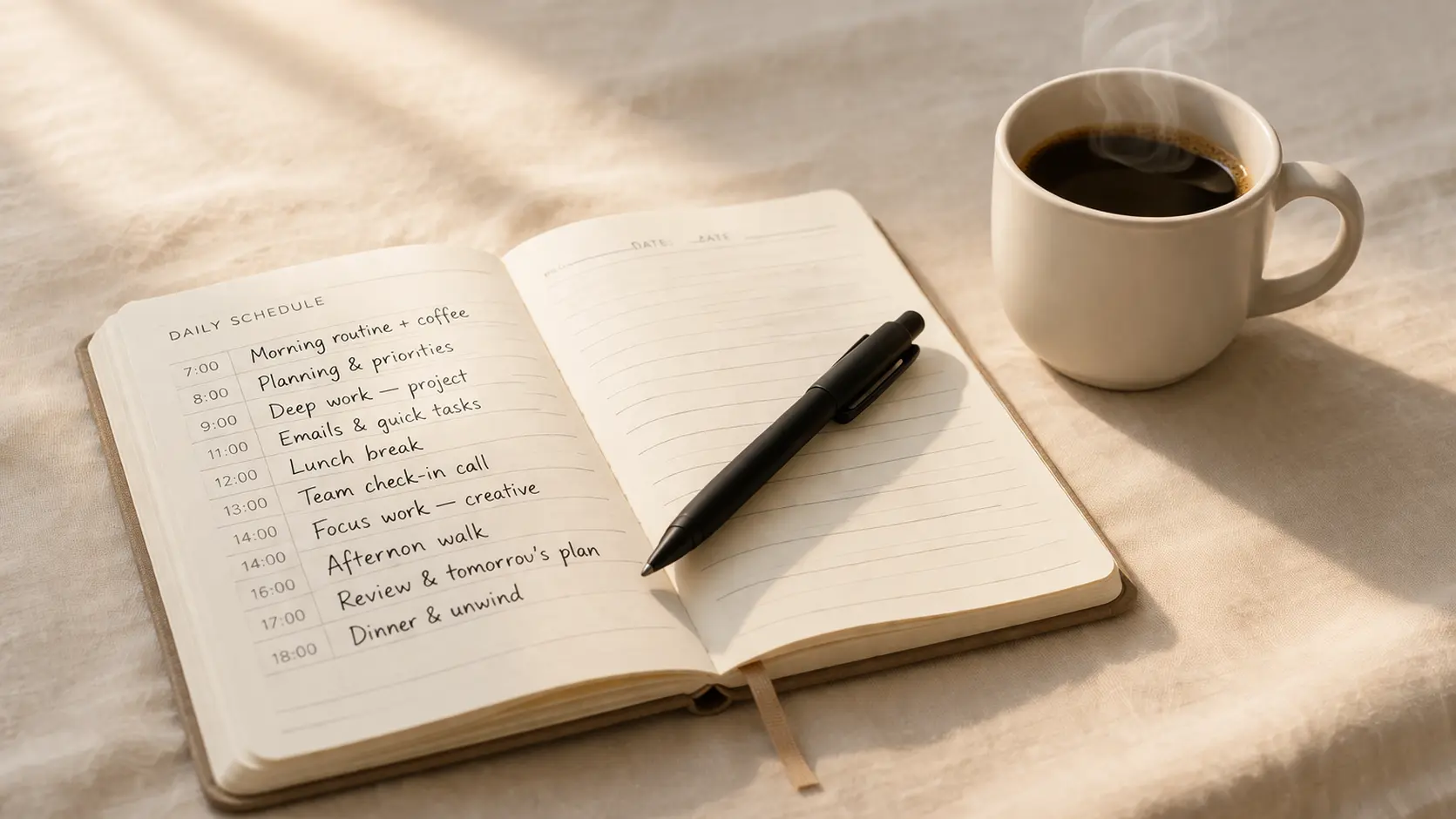
A daily structure guide is not about filling every hour. It is about having a loose map — a sense of what kinds of activities belong to which parts of the day so that transitions feel natural rather than disorienting.
The goal is clarity, not control. You are not trying to build a perfect routine — you are building a workable one.
Before adjusting anything, spend a few days observing what actually happens in your day.
Find the moments that naturally divide your day — meals, walks, transitions between contexts.
Rather than scheduling by the clock, group activities by energy requirement and place them in the appropriate phase.
Phase Reference
Most days can be loosely grouped into three segments. Each carries a different quality of attention and a different set of appropriate activities.
Between Phases
The moments between one phase and the next are often overlooked. Brief, intentional transitions — even just two or three minutes — help the mind shift contexts more smoothly.
Moving abruptly between very different types of work creates cognitive friction. A short pause — walking, breathing, or simply stepping away from the screen — helps clear the previous context.
Building small buffer windows around significant tasks prevents one overrun activity from compressing everything else. Unscheduled time is a structural element, not wasted space.
Short, regular breaks — not just one long lunch — distributed across the day help maintain a steadier level of attention over time.
A brief closing ritual at the end of the work segment — writing three things done, closing tabs, making a short list for tomorrow — signals to the mind that this block is complete.
Explore More
Learn how to build a daily structure that stays workable even as life changes — realistic, adaptable, and free of pressure.
Sustainable Routine